
From Dorms to UW Madison Housing: What to Know Before You Move Off Campus
Moving out of the dorms feels exciting right up until it starts feeling real. Then it becomes a mix of freedom, logistics, and a lot of little questions you did not think to ask at first. Where will groceries go? Will you actually use the kitchen? How far is too far to walk to class when it is cold, or raining, or you are just tired?
That is probably why the move from residence halls to uw madison housing feels bigger than it looks on paper. It is not just a change of address. It is a shift in routine, in privacy, in independence, and honestly in how you picture your week working.
If you are starting to explore off-campus living, it helps to look at places with that transition in mind. Not just what looks good online, but what might actually make everyday life easier. At Theory Madison, that usually starts with getting familiar with the basics first, then thinking through how you want next year to feel.
Dorm Life and Off-Campus Life Are Not the Same Thing
This sounds obvious, but I think students sometimes underestimate how different the day-to-day experience can be. Dorms are structured. A lot is built in. You are used to shared spaces, a campus-centered routine, and probably a little less control over your environment.
Off-campus living tends to feel more personal. That can be great. It can also be an adjustment.
When people start looking at uw madison housing, they often focus on the exciting parts first, like having more room or living with friends. Those things matter, of course. But so do the smaller shifts: handling your own schedule, managing shared space a little differently, figuring out where you go when you want quiet, and where you go when you do not.
Start With the Floor Plan, Not Just the Idea of It
One of the first things worth doing is spending time on the Floor Plans page. Not quickly. Really looking.
Sometimes students know they want to move off campus, but they are still thinking in broad terms. Two-bedroom, four-bedroom, maybe something with more privacy. But the actual layout matters more than people expect. The way the common area is set up, where the bedrooms sit, how much separation there is between personal and shared space, all of that shapes how a place feels after the novelty wears off.
And that part matters. A lot.
It is one thing to love the idea of off-campus housing. It is another to picture where you will study on a Tuesday night, where you will eat breakfast before class, or whether your room actually feels like somewhere you can reset for a bit.
Look for a Setup That Feels Easier, Not Just Bigger
This is where students sometimes surprise themselves. More space sounds automatically better, but what people usually want is not just more square footage. They want a place that feels more manageable, more comfortable, more theirs.
Theory Madison highlights fully furnished apartments, varied floor plan options, and shared as well as more private spaces across the community, which is useful when you are trying to bridge that gap between dorm living and something more independent.
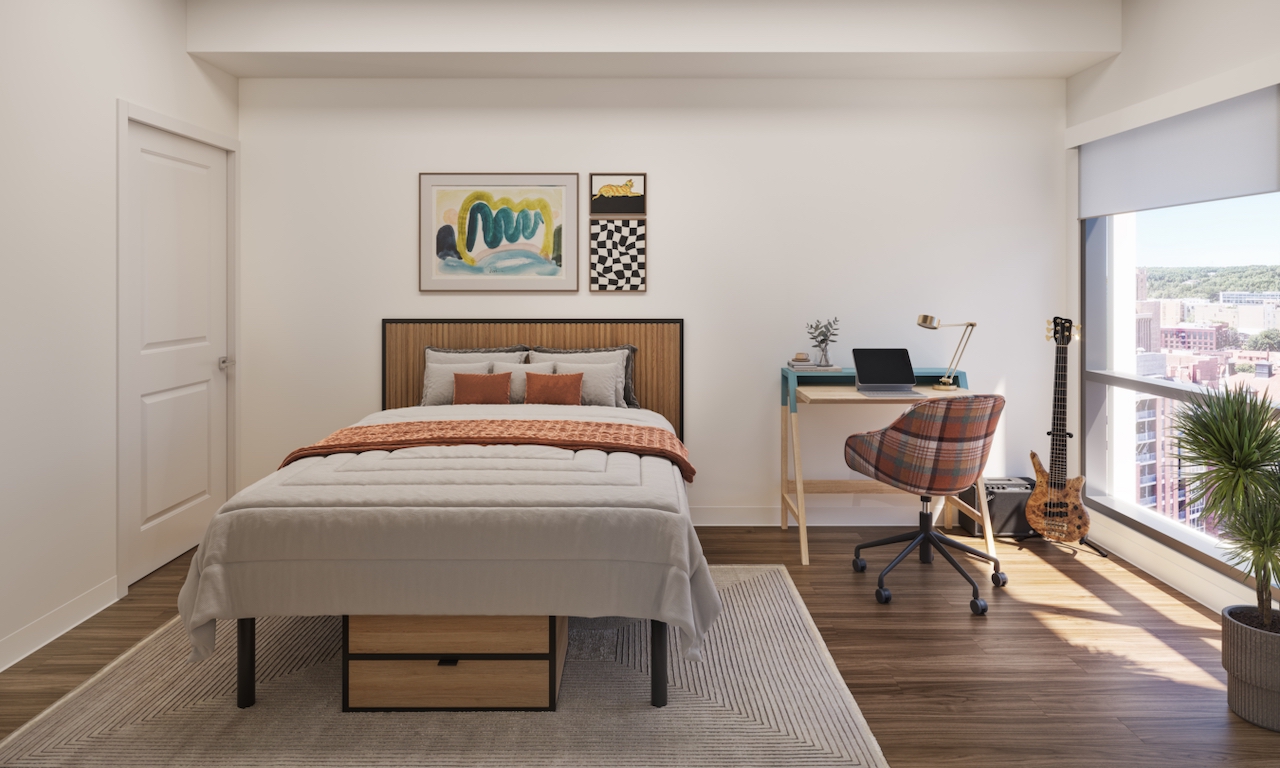
Before you move forward, it helps to browse the Gallery and Virtual Tours. Photos and tours are not the same as living there, obviously, but they can help you notice things you might otherwise skip past. Does the furniture setup make sense? Does the kitchen look functional? Can you imagine the common area being social without feeling chaotic all the time?
Sometimes the right place is not the one that feels the most impressive at first glance. It is the one that seems easiest to live in.
Think About Your Routine Before You Think About Aesthetic
I like a nice interior as much as anyone, probably more than I should. But when students move from dorms to uw madison housing, routine usually ends up mattering more than design details.
That is where the Amenities page becomes more helpful than it first appears. Theory Madison lists features like study areas, a fitness center, a café space, furnished interiors, and wellness-focused spaces, and those details are worth looking at through a practical lens, not just a marketing one.
Ask yourself things like:
- Where would I go when I need quiet?
- Where would I go when I want to be around people but not necessarily “out”?
- Would this setup make getting through a busy week easier?
- Can I picture myself actually using these spaces in October, not just on move-in day?
That last question is maybe the best one. It cuts through a lot.
Location Feels Different Once You Are Off Campus
In the dorms, your location is often part of the system. Once you move off campus, you start noticing distance and convenience in a different way. Not dramatically, but enough.
Theory Madison positions itself steps from UW–Madison and between State Street and University Avenue, which is the kind of detail that matters more once you are building your own routine.
It helps to review the Neighborhood page and think about your actual habits. How do you get to class? Where do you stop for coffee? How much do you care about being able to head home between commitments? Some students want to be in the center of everything. Others want access without constant noise. Most people, if they are honest, want some version of both.
There Are Also Questions You Should Just Ask
This part is less exciting, maybe, but it can save you some stress later. Before moving from dorms to off-campus living, ask the practical questions directly. Not because something is wrong, just because clarity is useful.
- What is included in the furnished setup?
- What shared spaces do residents use the most?
- What resources are available if you are moving from out of state or from outside the U.S.?
- Where can you find answers to common move-in or community questions?
The FAQs page is a good place to start, and the International page may be especially helpful for students who need a little more planning support before making a move.
Moving Off Campus Usually Means Wanting More Ownership
That is really what this shift comes down to. Students move from dorms to uw madison housing because they want more say in how they live, how they study, how they recharge, and how they set up their space. Maybe that sounds a little lofty for an apartment decision, but I do not think it is wrong.
The best off-campus option is not just somewhere to sleep near campus. It is somewhere that makes the rest of your week feel more possible.
If you are narrowing down next steps, it can help to revisit the Floor Plans, compare the Amenities, and reach out through Contact Us when you are ready to ask more specific questions.
Key Takeaways
- Moving from dorms to uw madison housing is less about “more space” and more about finding a setup that fits your real routine.
- Review floor plans carefully so you understand how the layout will feel day to day, not just on paper.
- Pay attention to practical amenities like study areas, furnished spaces, and wellness or fitness features you might actually use.
- Think through location in terms of your habits, schedule, and how you want off-campus life to feel.
- Use Theory Madison’s Floor Plans, Virtual Tours, FAQs, and Contact Us pages to keep researching.